AIImpish
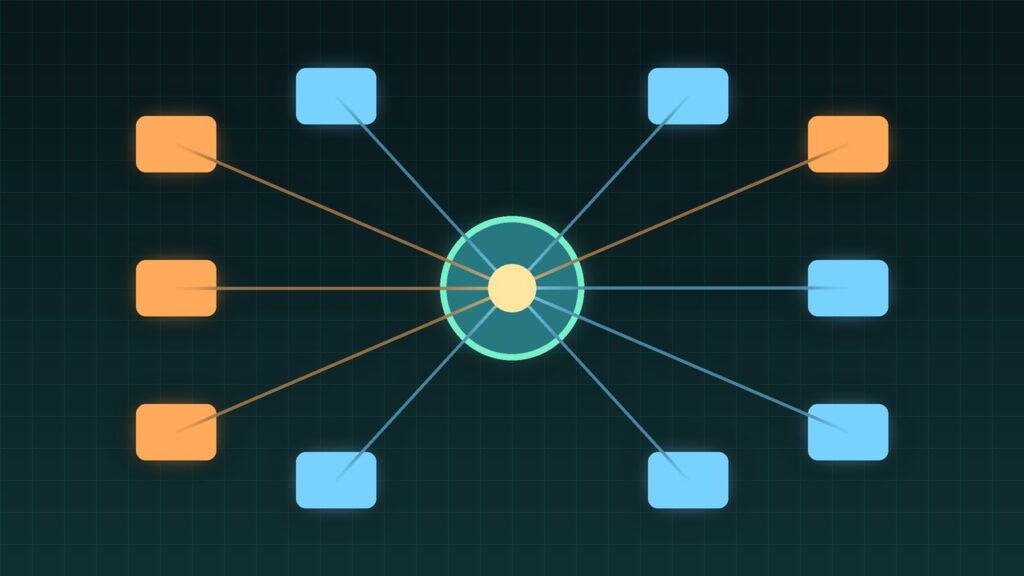
Baidu released ERNIE-5.5-Flash-Base on November 5, 2026: an open end-of-pretraining Mixture-of-Experts checkpoint with 280B total parameters and 14B activated per token. The weights are the pre-training finish line — before mid-training or post-training — aimed at domain adaptation, instruction tuning, and RL research rather than chat out of the box.
Coffee summary
- FACT (Baidu): 280B MoE, 14B active/token; 43 layers; trained from scratch on 33.5T tokens; training context extended to 128K; fine-tune/inference support claimed up to 1M context.
- FACT: Available on Hugging Face as FP8 and BF16 safetensors (
baidu/ERNIE-5.5-Flash-Base/...-BF16). - FACT: Released under ERNIE 5.5 Flash Base Model License Agreement v1.0 — commercial use above a stated revenue threshold needs prior written authorization; territorial exclusions apply (check the LICENSE file).
- CLAIM (Baidu eval table): Strong vendor-reported scores vs DeepSeek-V4-Flash-Base, Hy3-preview-Base, and MiMo-V2.5-Base on MMLU/MMLU-Pro, code, and several long-context suites — mark as CLAIM until third parties reproduce.
- FACT: Post-trained ERNIE 5.5 Flash is described as forthcoming; this drop is the base only.
What happened
Baidu’s technical note emphasizes efficiency for further training: hybrid MLA + Heavily Compressed Attention (most layers compress history 128×), Multi-Router Latent MoE (512 routed experts, top-10, plus a shared expert), manifold-constrained hyper-connections, a MultiMax output head, and ECHO in place of a separate MTP module. Tokenizer vocabulary is about 200K with right-to-left digit grouping for numbers.
Quick start uses Transformers with add_special_tokens=True (BOS expected). Baidu also documents SGLang/vLLM serving via the completions API.
Why it matters
Most “open” launches are instruct models. A clean base checkpoint at this scale is more useful for labs that want to run their own mid/post-training than for end users who want a chatbot today. The license’s commercial threshold and geographic exclusions matter as much as the parameter count — read them before planning a product.
Who should care
- Open-weight researchers comparing MoE bases in the ~280B-A14B class.
- Companies adapting models for domain or agent workloads who can accept Baidu’s license terms.
- Infra teams evaluating FP8/BF16 serving cost for long-context MoE.
Limitations
Base model ≠ assistant: expect raw completion behavior without your own post-training. Vendor benchmarks use Baidu’s harness and an LLM judge for free-form QA — not an independent leaderboard. License revenue gates and country exclusions can block some commercial paths. 1M context support is a capability claim for fine-tune/inference setups, not a promise about quality at that length.
What to do next
- Read the Hugging Face LICENSE before download/commercial planning.
- Pull the BF16 or FP8 weights only if you have the GPU budget for MoE serving tests.
- Run a small domain fine-tune pilot rather than judging the base on chat vibes.
- Watch for the post-trained ERNIE 5.5 Flash if you need an instruct model.
AIImpish Take
ERNIE-5.5-Flash-Base is a serious open starting point for people who train models — not a drop-in Claude/ChatGPT replacement. License first, benchmarks second, demos third.
Related on AIImpish
Sources: Baidu ERNIE 5.5 Flash Base release notes; Hugging Face model card; MarkTechPost summary.