 AIImpish
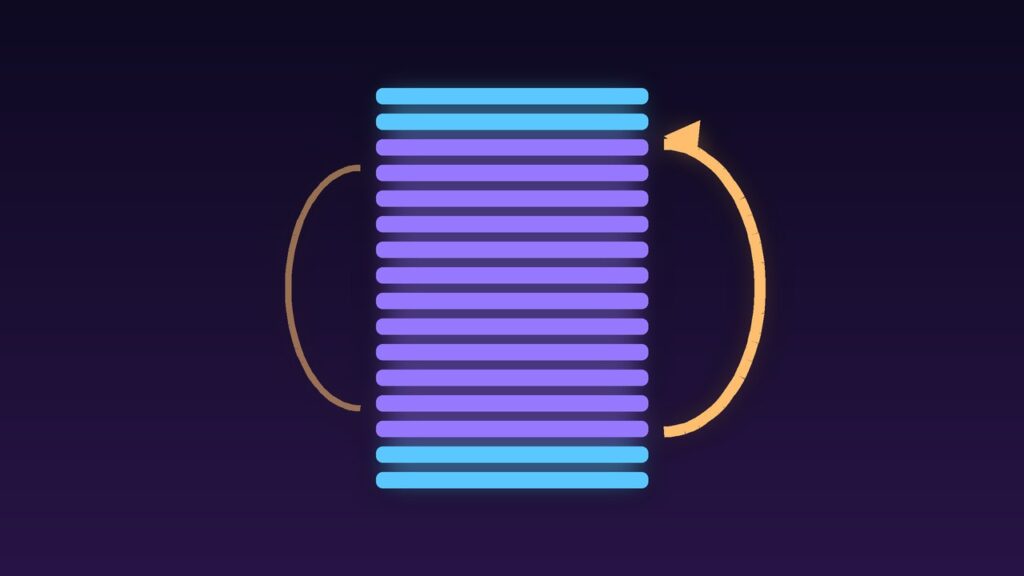
SenseTime has released SenseNova-Loop-9B-Preview, an open-weight model that tries to get more out of a small model by running part of it twice. It reads text and images, writes text, and is aimed at long documents, coding, and tool-using agents. The weights are on Hugging Face under the Apache 2.0 license.
Coffee summary
- FACT: SenseTime released the model on October 30, 2026, with weights on Hugging Face and code on GitHub.
- FACT: The model has 32 distinct decoder layers. A block of 24 of them (layers 4 to 27) runs twice with the same weights, giving 56 layer passes per token.
- FACT: The model card lists about 9 billion total parameters and about 14.6 billion “inference parameters.”
- CLAIM: SenseTime says it beats Qwen3.5-27B on several agent and office-task benchmarks, but it trails on Terminal Bench 2.1.
- FACT: The license is Apache 2.0, which allows commercial use.
What happened
SenseTime announced the release on X, describing the idea as “scaling compute depth, not just model size.” Most language models pass each token through each layer once. This one loops a large middle block, so the model does more computation without storing more layer weights.
To help information flow through the repeated block, SenseTime uses what it calls manifold-constrained hyper-connections (mHC), which carry two streams of information around the looped layers. The model also mixes attention types: in each group of four layers, three use linear attention and one uses full attention.
Why it matters
Bigger models usually mean more memory just to load the weights. A looped model stores fewer distinct weights, but still does extra work per token. OPINION: If the approach holds up, it could help teams that want stronger reasoning from a model that fits on smaller hardware. It is not a free lunch, though: running layers twice also means more compute per token.
What changed, at a glance
| SenseNova-Loop-9B-Preview | |
|---|---|
| Input / output | Text and images / text |
| Total parameters | About 9B |
| Inference parameters | About 14.6B |
| Distinct decoder layers | 32 |
| Layer passes per token | 56 |
| Training context | Up to 262,144 tokens |
| Faster inference | Multi-token prediction available; two other methods still in training |
| License | Apache 2.0 |
Benchmarks (company numbers)
CLAIM: In SenseTime’s chart, as reported by Tech City Authority, the 9B model scores 66.89 on WorkBuddy Bench versus 60.53 for Qwen3.5-27B, 70.70 on RaccoonPPTBench versus 59.08, and 13.72 on AutomationBench versus 10.17. On Terminal Bench 2.1, it scores 40.45 versus 47.19 for Qwen3.5-27B.
RaccoonPPTBench is described as an internal benchmark, and the demo videos on the model page come from SenseTime’s own Raccoon Work product. None of these results had been independently verified at the time of writing.
Who should care
- Developers who run open models and want an Apache-licensed option for documents, slides, and agents.
- Researchers interested in looped transformers as an alternative to simply training bigger models.
- Teams building office-style agents, where SenseTime’s own benchmarks point.
Limitations and open questions
- It is a preview. The technical report is listed as “TBD” on the model card.
- Custom code required. Loading it in Transformers needs
trust_remote_code=True. For vLLM and SGLang, the model card points to specific pull requests rather than standard releases. - Hardware is not trivial. The serving examples on the model card use four GPUs.
- Mixed benchmark picture. It loses to a larger model on Terminal Bench 2.1, a common coding-agent test.
What to do next
- Read the model card on Hugging Face before downloading, including the tested Transformers and PyTorch versions.
- Review the custom code before running it, as you should for any model that needs remote code.
- Test it on your own documents rather than relying on internal benchmarks.
- Wait for the technical report if you need to explain the design to your team.
AIImpish Take
Looping layers is a clever way to squeeze more thinking out of fewer weights, and the Apache license makes it easy to try. But this is a preview with company-run benchmarks and custom code. Treat it as an interesting experiment to test, not yet a drop-in replacement for your current open model.
Related on AIImpish
- Mistral Large 4 Goes Open Weight: A Trillion-Parameter Model You Can Download, With One License Catch
- Microsoft’s Mage-VL-Cowork: A 4B Open Model That Knows When to Click and When to Code
- NVIDIA Nemotron 3.5 Transcribe: An Open Model That Knows Who Said What, in 40 Languages
Sources: Hugging Face, SenseNova-Loop-9B-Preview model card; GitHub, OpenSenseNova/SenseNova-Loop; Tech City Authority, SenseTime open sources SenseNova-Loop-9B-Preview.