 AIImpish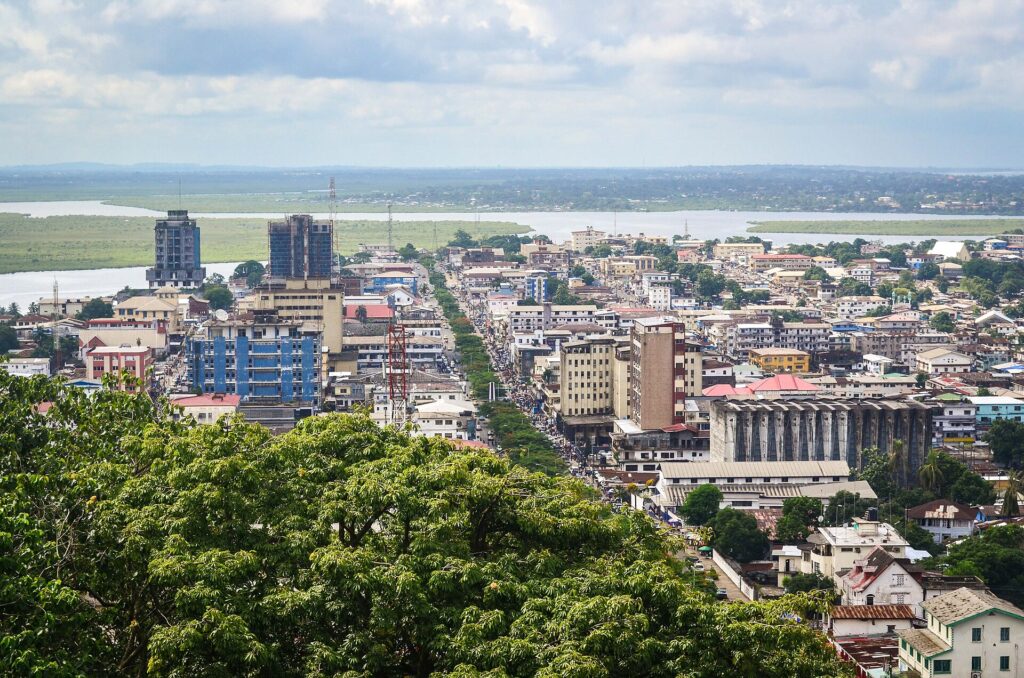
Lịch sử thế giới › Châu Phi · Africa › Liberia
Ảnh bìa / Cover photo: blk24ga · Wikimedia Commons · CC BY 3.0
Tóm tắt · In brief
Là nước cộng hòa lâu đời nhất châu Phi, Liberia được lập nên bởi những người Mỹ gốc Phi tự do trở về lục địa, để rồi trải qua hơn một thế kỷ phân hóa, hai cuộc nội chiến tàn khốc và sự hồi sinh dưới nữ tổng thống dân cử đầu tiên châu Phi.
Africa’s oldest republic, Liberia was founded by free African Americans returning to the continent, then endured a century of division, two brutal civil wars, and a revival under Africa’s first elected woman head of state.
⏳ Dấu mốc · Key dates🇻🇳 Tiếng Việt🇬🇧 English📚 Nguồn · Sources
Dấu mốc chính · Key dates
- 1822Người định cư đến mũi Mesurado / Settlers land at Cape Mesurado
- 1847Tuyên bố độc lập / Independence declared
- 1980Đảo chính của Samuel Doe / Samuel Doe’s coup
- 1989Bắt đầu nội chiến / Civil war begins
- 2006Ellen Johnson Sirleaf nhậm chức / Ellen Johnson Sirleaf takes office
Lịch sử Liberia
Bờ biển Hạt Tiêu và các dân tộc bản địa
Trước khi có nhà nước Liberia, bờ biển và rừng rậm nơi đây là quê hương của hơn mười lăm nhóm dân tộc như Kpelle, Bassa, Kru, Grebo, Vai và Gola. Người Kru nổi tiếng là thủy thủ lành nghề, phục vụ trên tàu châu Âu dọc bờ biển Tây Phi. Người Vai đã sáng tạo hệ chữ viết âm tiết riêng vào đầu thế kỷ 19, một trong những hệ chữ bản địa hiếm hoi ở châu Phi. Thương nhân Bồ Đào Nha gọi vùng này là Bờ biển Hạt Tiêu, theo loại gia vị “hạt thiên đường” được buôn bán tại đây.
Người định cư và nền cộng hòa
Năm 1822, Hội Thực dân Mỹ đưa những người Mỹ gốc Phi tự do và nô lệ được giải phóng đến mũi Mesurado, nơi Monrovia ra đời, đặt theo tên tổng thống James Monroe. Ngày 26 tháng 7 năm 1847, Liberia tuyên bố độc lập với Joseph Jenkins Roberts là tổng thống đầu tiên. Nhóm Mỹ-Liberia, chỉ chiếm một phần nhỏ dân số, nắm quyền lực chính trị suốt hơn một thế kỷ qua Đảng True Whig, trong khi phần lớn dân bản địa bị gạt ra ngoài. Năm 1926, công ty Firestone nhận nhượng quyền đồn điền cao su khổng lồ, và thời William Tubman (1944–1971) chứng kiến tăng trưởng nhờ quặng sắt.
Chiến tranh và hồi sinh
Năm 1980, trung sĩ Samuel Doe, người gốc Krahn, lật đổ và giết tổng thống William Tolbert, chấm dứt sự thống trị của nhóm Mỹ-Liberia. Cuộc nổi dậy của Charles Taylor năm 1989 mở đầu hai cuộc nội chiến (1989–1997 và 1999–2003) khiến khoảng 250.000 người thiệt mạng và hàng trăm nghìn người phải lánh nạn. Hiệp định hòa bình Accra năm 2003 chấm dứt xung đột; Taylor sau đó bị Tòa án Đặc biệt cho Sierra Leone kết án. Năm 2006, Ellen Johnson Sirleaf trở thành nữ nguyên thủ dân cử đầu tiên của châu Phi và đoạt giải Nobel Hòa bình năm 2011. Sau dịch Ebola 2014–2016, các cuộc chuyển giao quyền lực hòa bình đưa George Weah rồi Joseph Boakai lên nắm quyền.
History of Liberia
The Pepper Coast and its peoples
Before the Liberian state existed, its coast and forests were home to more than fifteen peoples, including the Kpelle, Bassa, Kru, Grebo, Vai and Gola. The Kru were renowned sailors who served on European ships along the West African coast. The Vai devised their own syllabic script in the early nineteenth century, one of Africa’s rare indigenous writing systems. Portuguese traders called the region the Pepper Coast, after the “grains of paradise” spice traded there.
Settlers and the republic
In 1822 the American Colonization Society brought free African Americans and emancipated slaves to Cape Mesurado, where Monrovia was founded and named after President James Monroe. On 26 July 1847 Liberia declared independence, with Joseph Jenkins Roberts as its first president. The Americo-Liberians, a small fraction of the population, held political power for over a century through the True Whig Party, while most indigenous people were excluded. In 1926 the Firestone company won a vast rubber plantation concession, and the era of William Tubman (1944–1971) saw growth driven by iron ore.
War and recovery
In 1980 Master Sergeant Samuel Doe, of Krahn origin, overthrew and killed President William Tolbert, ending Americo-Liberian dominance. Charles Taylor’s 1989 rebellion began two civil wars (1989–1997 and 1999–2003) that killed about 250,000 people and displaced hundreds of thousands. The 2003 Accra peace agreement ended the fighting; Taylor was later convicted by the Special Court for Sierra Leone. In 2006 Ellen Johnson Sirleaf became Africa’s first elected woman head of state and shared the 2011 Nobel Peace Prize. After the Ebola epidemic of 2014–2016, peaceful transfers of power brought George Weah and then Joseph Boakai to office.
📚 Nguồn đối chiếu · Sources
Bài tổng quan chọn lọc do AIImpish biên soạn; với các vấn đề còn tranh luận, nên đọc thêm tư liệu gốc và nghiên cứu chuyên ngành. / A selective overview by AIImpish; consult primary records and specialist scholarship on contested questions.
Khám phá tiếp · Keep exploring
Đọc lịch sử các nước khác ở Châu Phi · Africa hoặc mở danh mục 195 quốc gia →


.jpg)