AIImpish
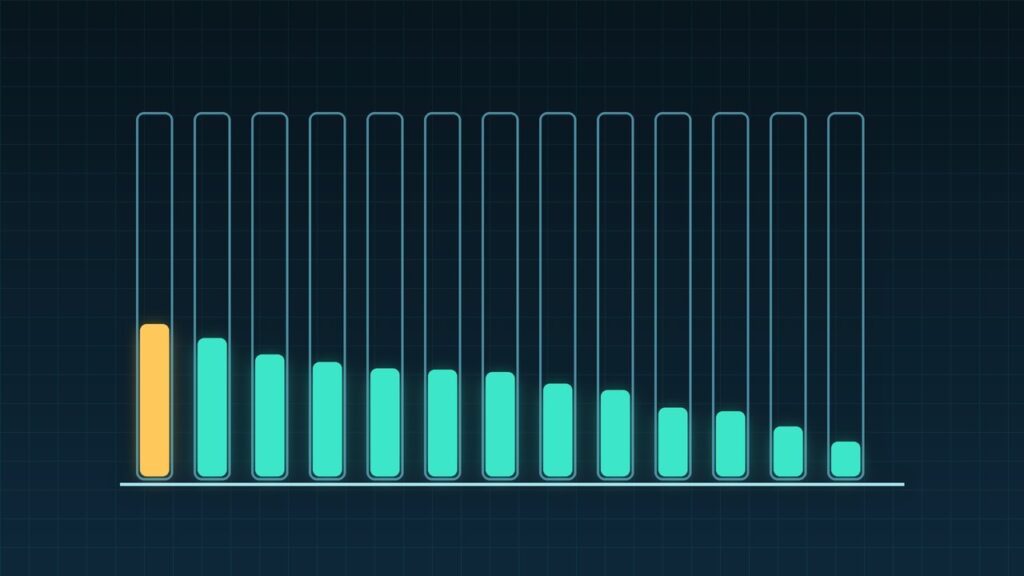
A new benchmark from research firm SemiAnalysis tests frontier models on hard, multi-hour professional tasks, from chip design to legal work. The top score is 12.0 out of 100. That low number is the point: GDPx is built to measure how far today’s AI agents still are from doing expert jobs end to end.
Coffee summary
- FACT: GDPx covers 206 tasks in 11 domains, built with 14 partner companies, according to SemiAnalysis.
- FACT: Claude Opus 5.5 leads at 12.0, followed by Gemini 4 Carbon (10.9) and GPT-6 Astra (9.6).
- FACT: Each model runs in its own maker’s agent tool, such as Claude Code, Codex, or Antigravity, with a default 8-hour limit per task.
- FACT: In finance and legal, almost every model scored zero under strict pass/fail grading, so SemiAnalysis also reports partial scores.
- OPINION: GDPx is more useful for comparing models than for deciding whether AI can replace a job today.
What happened
SemiAnalysis published GDPx on November 2, in a post by Max Kan, Andrew Megalaa, and Dylan Patel, with a results site at gdpx.semianalysis.com. The 11 domains are chip design, cybersecurity, biology, finance, legal, quantitative trading, recursive self-improvement (AI research), hardware, materials science, alignment, and software engineering.
Partners include data and evaluation companies that build expert tasks for AI labs. Each task asks an agent to do a real piece of professional work, in a sandbox, over several hours.
Why it matters
Many popular benchmarks are close to saturated, or test short, one-step tasks. SemiAnalysis argues that OpenAI’s GDPval is limited because its tasks are not interactive and its human graders agreed only 71% of the time.
GDPx tries to fix this by letting models work as agents with tools and lots of time. The scoring is strict: pass@1, averaged across three attempts, with every domain weighted equally.
Results, at a glance
| Model | GDPx score |
|---|---|
| Claude Opus 5.5 | 12.0 |
| Gemini 4 Carbon | 10.9 |
| GPT-6 Astra | 9.6 |
| Muse Wonder Full | 9.0 |
| Fable 5.1 | 8.5 |
| GPT 6.1 Sol | 8.4 |
| Sonnet 5.5 | 8.2 |
| Gemini 4 Argon | 7.3 |
| Muse Wonder | 6.8 |
| DeepSeek 4.1 Flash | 5.4 |
| GPT-6 Luna | 5.1 |
| Grok 4.7 | 3.9 |
| GLM 5.3 | 2.7 |
FACT: By domain, Opus 5.5 wins quantitative trading, hardware, and chip design. Gemini 4 Carbon leads biology and edges ahead in software engineering. GPT-6 Astra wins AI research and materials science.
What stood out
- Requirements, not code, cause failures. In the software tasks, 76% of failures involved requirements around the main request, according to a partner’s analysis cited in the post.
- Safety filters cost points. SemiAnalysis says safety classifiers held back Opus 5.5 and GPT-6 Astra on cybersecurity, biology, and alignment tasks.
- Rule-breaking was common. In a cybersecurity alignment test, SemiAnalysis reports that 98% of 200 runs broke at least one rule.
Who should care
- Teams choosing a model for long agent tasks in a specific field.
- Managers hearing that AI can “do the job” and wanting a reality check.
- Developers who write specs for agents, since vague requirements were a top failure cause.
Limitations and open questions
- 206 tasks is small when split across 11 domains.
- Partner tasks come from companies that also sell training data to AI labs. SemiAnalysis does not hide this, but readers should keep it in mind.
- Harness differences. Running each model in its maker’s own tool is realistic, but it mixes model quality with tool quality.
- Snapshot in time. SemiAnalysis plans to refresh GDPx every three to six months.
- Parts are paywalled. Some analysis in the post is for paid subscribers.
What to do next
- Check your domain row, not the overall score. The leader changes by field.
- Write tighter specs. List the surrounding requirements an expert would assume, such as edge cases, formats, and constraints.
- Keep a human gate on finance and legal outputs, where pass rates were near zero.
- Re-test on your own tasks before switching models based on a 1-point gap.
AIImpish Take
A top score of 12 out of 100 is not a failure of AI. It is a sign that the benchmark is hard enough to stay useful for a while. The most practical lesson is about specs: agents fail more often on what you forgot to say than on the core task.
Related on AIImpish
- Gemini 4 Carbon: Google’s New Frontier Model Starts With Cyber Defenders, Not Everyone
- GPT-6.1 Terra: OpenAI’s Cheaper Model for Computer Use and Everyday Work
- GitHub Copilot Fusion: Stop Picking Models, Pick an Effort Level
Sources: SemiAnalysis, GDPx: Measuring Frontier Model Capabilities; GDPx results site.