AIImpish
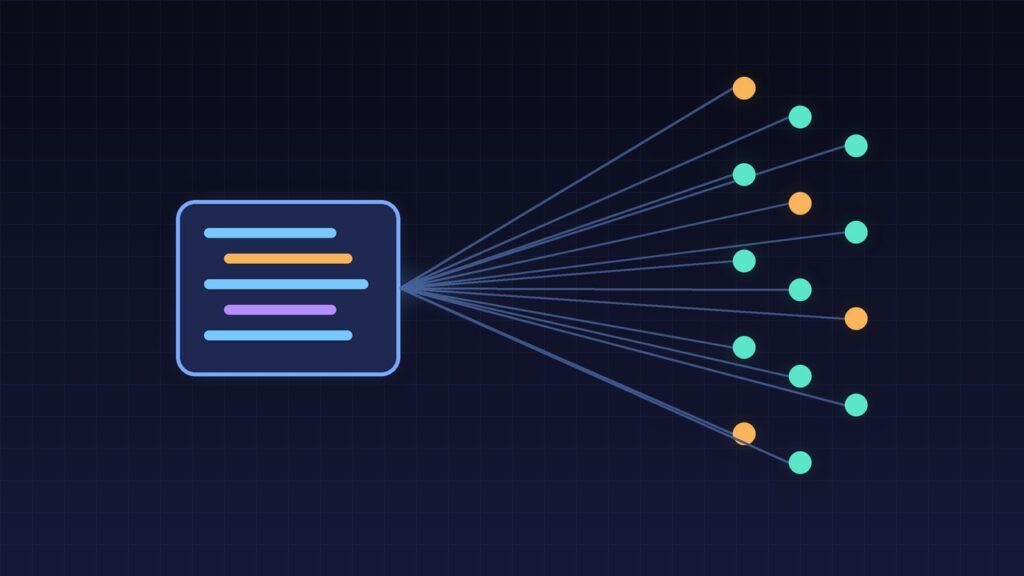
Coding agent startup Factory released Droid 1.0 on October 29. The headline change is how the agent uses tools. Instead of asking the model to call one tool, wait, read the result, and call the next, Droid lets the model write a small program that runs many tool calls in one go. Factory says this makes the agent cheaper, faster, and more reliable.
Coffee summary
- FACT: Droid 1.0 makes “programmatic tool calling” the default. The model writes JavaScript that runs in a sandbox and can make hundreds of tool calls in a single model request.
- FACT: Factory is model-independent. Droid works with OpenAI, Anthropic, and open-weight models, and has an automatic model router called Factory Router.
- FACT: Droid now sends 2 tool definitions at the start of a session instead of 11, cutting the first request from 20,887 to 13,055 tokens, according to Factory.
- CLAIM: On Terminal-Bench 4, Factory says Droid beats Codex, Claude Code, Cursor, OpenCode, and Devin on the same models, at up to 24% lower cost.
- FACT: Droid 1.0 ships as a desktop app for macOS and Windows, a terminal app, and an SDK,
@factory/droid-sdk.
What happened
Factory calls Droid a “harness”: everything around the model, including prompts, tools, and the loop that runs it. In its launch post, the company says Droid 1.0 is its largest update yet.
The core feature is a Script tool. The model writes JavaScript that runs in a sandbox with no file, network, or system access of its own. The script can only act through Droid’s tools. Raw results such as file contents and logs stay inside the program, and the model reads only what the script prints.
Script mode is on by default for models including GPT-6.1 Sol, GPT-6.1 Terra, GPT-6 Astra, Claude Opus 5.5, Claude Fable 5.1, and Kimi K3.
Why it matters
Every request an agent makes re-sends its instructions and history. Over hundreds of steps, that adds up. Factory gives two examples from its own sessions. A cleanup that moved and checked 151 Linear issues took 312 tool calls. Factory says the script did it in 2 requests and about 61,000 tokens, compared with an estimated 36 requests and about 3.1 million tokens with direct calls.
OPINION: The bigger benefit may be reliability. When checks and loops run as code, the model cannot “forget” a case halfway through a long task.
What changed, at a glance
| Before | Droid 1.0 (per Factory) | |
|---|---|---|
| Tool use | One or two calls per model request | Many calls per script, run in a sandbox |
| Tools sent up front | 11 | 2, others load on demand |
| First request | 20,887 tokens | 13,055 tokens |
| Cost on Opus 5.5 | Direct calls | 15% lower with Script mode |
| App launch to first paint | 1,839 ms | 488 ms |
Who should care
- Developers running long agent sessions where token bills and context limits matter.
- Teams that switch between models and want one tool that works across vendors.
- Builders of internal agents who can reuse the same harness through the SDK.
- Anyone designing agents who wants to see the programmatic tool-calling pattern in practice.
Limitations and open questions
- Benchmarks are self-reported. Factory ran the Terminal-Bench 4 tests itself from October 23 to 28. Independent results are not yet available.
- Method choices matter. Some Opus 5.5 tasks blocked by Anthropic’s moderation were rerun on Opus 5. A Devin task that stopped to ask a question counted as a pass if Codex passed it.
- Not always faster. On GPT-6.1 Sol, Factory says Droid used 12% fewer tokens than Codex but took 10% longer.
- Not new as an idea. Factory itself credits earlier work from CodeAct research, Cloudflare, Anthropic, and Codex.
What to do next
- Try it on a repetitive task such as triaging tickets or checking CI runs, where script mode should help most.
- Compare your own bill. Run the same task in Droid and in your current agent, and check tokens and time.
- Review scripts before trusting them on anything that writes to production systems.
- Borrow the pattern. If you build agents, consider letting the model write code that calls your tools, instead of one call per turn.
AIImpish Take
The agent race is no longer only about which model is smartest. How the model is wrapped matters too, and Factory is betting that letting models write programs is the next step. The numbers are Factory’s own, so test before switching, but the idea is worth stealing.
Related on AIImpish
- DeepSeek Super-Agent: An Open-Source Coding Agent That Watches Your Repo and Team Chat
- Android Studio Now Lets You Bring Claude, Codex, or 40+ Other Coding Agents: How to Set It Up
- AWS Turns Step Functions Workflows Into AI Agent Tools: Let the Agent Decide, Let the Workflow Obey
Sources: Factory, Droid 1.0: Building a Frontier Harness; Neural Brew, Factory Launches Droid 1.0.