 AIImpish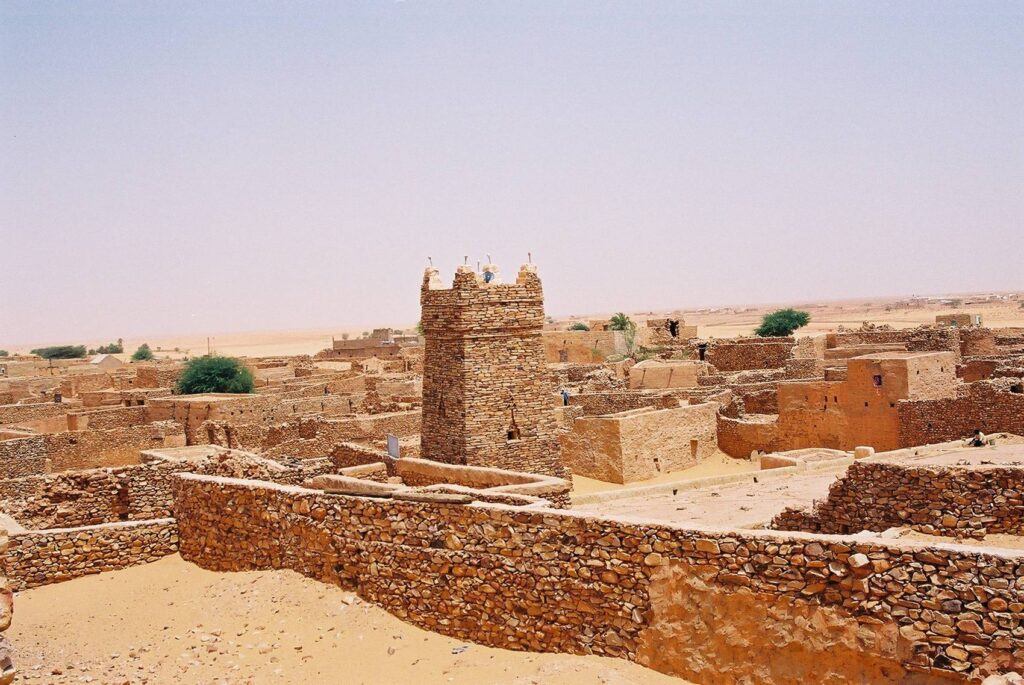
Lịch sử thế giới › Châu Phi · Africa › Mauritanie
Ảnh bìa / Cover photo: François COLIN · Wikimedia Commons · CC BY-SA 2.5
Tóm tắt · In brief
Là cầu nối giữa Maghreb Ả Rập và châu Phi hạ Sahara, Mauritanie lưu giữ những thị trấn đoàn lữ hành cổ như Chinguetti, nơi khởi phát phong trào Almoravid, và mang lịch sử của một xã hội du mục đầy biến động bên rìa sa mạc.
A bridge between the Arab Maghreb and sub-Saharan Africa, Mauritania guards ancient caravan towns such as Chinguetti, gave rise to the Almoravid movement, and carries the history of a nomadic society on the desert’s edge.
⏳ Dấu mốc · Key dates🇻🇳 Tiếng Việt🇬🇧 English📚 Nguồn · Sources
Dấu mốc chính · Key dates
- Thế kỷ 11Phong trào Almoravid khởi phát / Almoravid movement arises
- 1644–1674Chiến tranh Char Bouba / Char Bouba war
- 1920Thành thuộc địa Pháp / Becomes a French colony
- 1960Độc lập / Independence
- 2019Chuyển giao quyền lực dân cử đầu tiên / First transfer between elected presidents
Lịch sử Mauritanie
Từ Sahara xanh đến Almoravid
Hàng nghìn năm trước, khi Sahara còn ẩm ướt hơn, những người chăn nuôi để lại tranh khắc đá và các làng đá ở vách núi Tichitt–Oualata. Kinh đô của Đế quốc Ghana cổ, được nhiều nhà khảo cổ xác định là Koumbi Saleh, nằm ở đông nam Mauritanie ngày nay. Vào thế kỷ 11, người Sanhaja Berber du mục khởi xướng phong trào cải cách Hồi giáo Almoravid, tiến về phía bắc chinh phục Maroc và al-Andalus. Các thị trấn Chinguetti, Ouadane, Tichitt và Oualata phát triển thành trạm dừng của đoàn lạc đà và trung tâm học thuật, nay được UNESCO công nhận.
Bộ lạc, Char Bouba và thời Pháp thuộc
Từ thế kỷ 14, các bộ lạc Ả Rập Beni Hassan dần di cư vào vùng này. Cuộc chiến Char Bouba (1644–1674) giữa họ và các nhóm Berber kết thúc bằng một trật tự xã hội phân tầng: các chiến binh Hassan nắm quyền chính trị, các bộ lạc Berber giữ vai trò học giả tôn giáo, còn tiếng Hassaniya Ả Rập trở nên phổ biến. Các tiểu vương quốc Trarza, Brakna, Tagant và Adrar kiểm soát thương mại gôm arabic với người châu Âu ở sông Senegal. Pháp thâm nhập từ phía nam đầu thế kỷ 20 và biến Mauritanie thành thuộc địa trong Tây Phi thuộc Pháp năm 1920, cai quản từ Saint-Louis ở Senegal.
Nước cộng hòa Hồi giáo hiện đại
Mauritanie độc lập ngày 28 tháng 11 năm 1960 dưới Moktar Ould Daddah, và thủ đô mới Nouakchott được xây gần như từ đầu. Việc tham gia chia cắt Tây Sahara năm 1976 kéo đất nước vào chiến tranh với mặt trận Polisario, dẫn đến cuộc đảo chính năm 1978. Maaouya Ould Taya cầm quyền từ 1984 đến 2005; thời kỳ này có cuộc khủng hoảng với Senegal năm 1989, khi hàng chục nghìn người Mauritanie da đen bị trục xuất. Chế độ nô lệ được bãi bỏ năm 1981 và bị hình sự hóa năm 2007, nhưng vẫn là vấn đề nhạy cảm. Năm 2019, Mohamed Ould Ghazouani kế nhiệm Mohamed Ould Abdel Aziz trong cuộc chuyển giao đầu tiên giữa hai tổng thống dân cử.
History of Mauritania
From a green Sahara to the Almoravids
Thousands of years ago, when the Sahara was wetter, herders left rock engravings and stone villages along the Tichitt–Oualata escarpment. The capital of the ancient Ghana Empire, identified by many archaeologists as Koumbi Saleh, lay in what is now southeastern Mauritania. In the eleventh century nomadic Sanhaja Berbers launched the Almoravid Islamic reform movement, which swept north to conquer Morocco and al-Andalus. The towns of Chinguetti, Ouadane, Tichitt and Oualata grew into caravan stops and centres of scholarship, now recognised by UNESCO.
Tribes, Char Bouba and French rule
From the fourteenth century the Arab Beni Hassan tribes gradually moved into the region. The Char Bouba war (1644–1674) between them and Berber groups ended in a stratified social order: Hassan warriors held political power, Berber tribes took on the role of religious scholars, and Hassaniya Arabic spread widely. The emirates of Trarza, Brakna, Tagant and Adrar controlled the gum arabic trade with Europeans on the Senegal River. France pushed in from the south in the early twentieth century and made Mauritania a colony within French West Africa in 1920, governed from Saint-Louis in Senegal.
The modern Islamic republic
Mauritania became independent on 28 November 1960 under Moktar Ould Daddah, and a new capital, Nouakchott, was built almost from scratch. Joining the partition of Western Sahara in 1976 drew the country into war with the Polisario Front, leading to a coup in 1978. Maaouya Ould Taya ruled from 1984 to 2005; his era included the 1989 crisis with Senegal, when tens of thousands of Black Mauritanians were expelled. Slavery was abolished in 1981 and criminalised in 2007, but remains a sensitive issue. In 2019 Mohamed Ould Ghazouani succeeded Mohamed Ould Abdel Aziz in the first handover between two elected presidents.
📚 Nguồn đối chiếu · Sources
Bài tổng quan chọn lọc do AIImpish biên soạn; với các vấn đề còn tranh luận, nên đọc thêm tư liệu gốc và nghiên cứu chuyên ngành. / A selective overview by AIImpish; consult primary records and specialist scholarship on contested questions.
Khám phá tiếp · Keep exploring
Đọc lịch sử các nước khác ở Châu Phi · Africa hoặc mở danh mục 195 quốc gia →