 AIImpish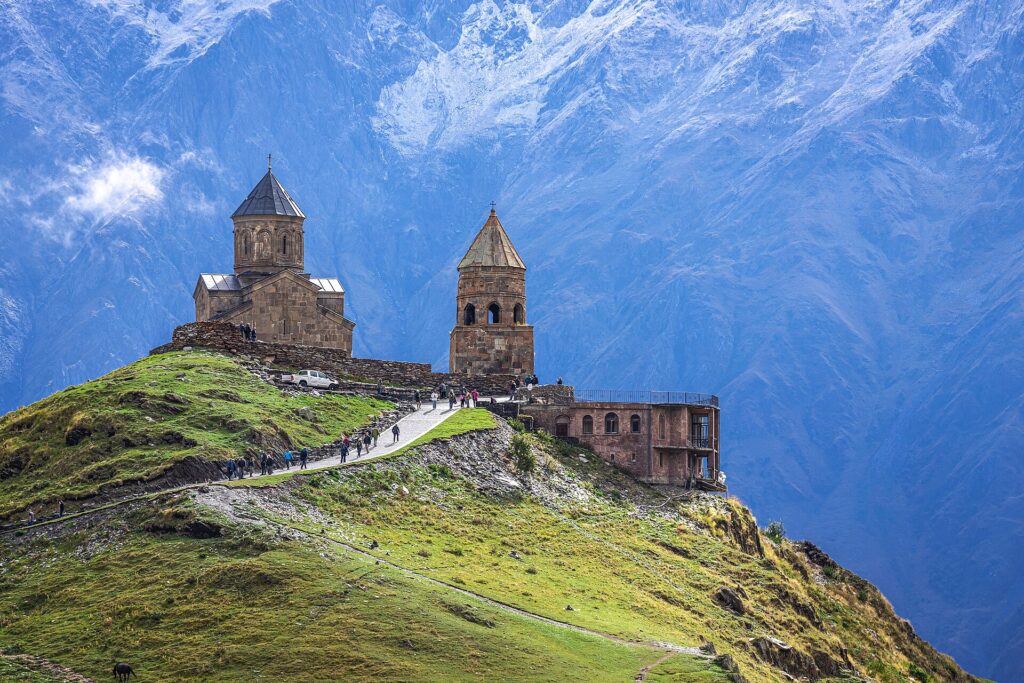
Lịch sử thế giới › Châu Á · Asia › Gruzia
Ảnh bìa / Cover photo: This Photo was taken by Supanut Arunoprayote. Feel free to use any of my images, but please mention me as the author and may send me a message. (สามารถใช้ภาพได้อิสระ แต่กรุณาใส่เครดิตผู้ถ่ายและอาจส่งข้อความบอกกล่าวด้วย) Please do not upload an updated image here without consultation with the Author. The author would like to make corrections only at his own source. This ensures that the changes are preserved.Please if you think that any changes should be required, please inform the author.Otherwise you can upload a new image with a new name. Please use one of the templates derivative or extract. · Wikimedia Commons · CC BY 4.0
Tóm tắt · In brief
Từ vùng đất Colchis của truyền thuyết Bộ lông cừu vàng đến triều đại huy hoàng của Nữ hoàng Tamar, Gruzia là xứ sở của những tu viện trên núi cao, một bảng chữ cái độc nhất và truyền thống làm rượu vang có lịch sử tám nghìn năm.
From Colchis of the Golden Fleece legend to the glittering reign of Queen Tamar, Georgia is a land of mountaintop monasteries, a unique alphabet and a winemaking tradition traced back some eight thousand years.
⏳ Dấu mốc · Key dates🇻🇳 Tiếng Việt🇬🇧 English📚 Nguồn · Sources
Dấu mốc chính · Key dates
- Thế kỷ 4 / 4th centuryVương quốc Iberia tiếp nhận Kitô giáo / Kingdom of Iberia adopts Christianity
- 1121Trận Didgori / Battle of Didgori
- 1801Đế quốc Nga sáp nhập Kartli-Kakheti / Russian Empire annexes Kartli-Kakheti
- 1918Cộng hòa Dân chủ Gruzia / Democratic Republic of Georgia
- 1991Độc lập khỏi Liên Xô / Independence from the Soviet Union
Lịch sử Gruzia
Colchis, Iberia và đức tin sớm
Các hóa thạch người cổ ở Dmanisi, niên đại khoảng 1,8 triệu năm, thuộc loại cổ nhất được tìm thấy ngoài châu Phi, và dấu vết làm rượu vang từ thời đồ đá mới cho thấy truyền thống lâu đời của vùng đất này. Thời cổ đại, miền tây là Colchis, nơi truyền thuyết Hy Lạp kể về Jason và Bộ lông cừu vàng, còn miền đông là vương quốc Iberia (Kartli) với kinh đô Mtskheta. Vào thế kỷ 4, Thánh Nino cải đạo vua Mirian III, đưa Kitô giáo trở thành quốc giáo. Bảng chữ cái Gruzia xuất hiện muộn nhất vào thế kỷ 5, mở đầu một nền văn học riêng.
Thời hoàng kim và những cuộc xâm lược
Triều đại Bagrationi dần thống nhất các vùng đất Gruzia. Vua David IV “Nhà Kiến thiết” đánh bại quân Seljuk trong trận Didgori năm 1121 và giành lại Tbilisi năm sau đó. Dưới thời Nữ hoàng Tamar cuối thế kỷ 12, vương quốc đạt đỉnh cao về lãnh thổ và văn hóa; thi sĩ Shota Rustaveli sáng tác trường ca “Hiệp sĩ khoác da báo”. Các cuộc xâm lược của Mông Cổ ở thế kỷ 13 và của Timur sau đó tàn phá đất nước, khiến vương quốc chia thành nhiều mảnh chịu sức ép của Ottoman và Ba Tư. Sau khi Tbilisi bị quân Ba Tư cướp phá năm 1795, Đế quốc Nga sáp nhập Kartli-Kakheti năm 1801.
Cộng hòa, Liên Xô và độc lập
Năm 1918, Cộng hòa Dân chủ Gruzia ra đời, nhưng Hồng quân tiến vào năm 1921 và đất nước trở thành một phần của Liên Xô; Stalin sinh ra tại thị trấn Gori. Ngày 9/4/1989, quân đội Xô viết đàn áp một cuộc biểu tình ở Tbilisi, làm nhiều người thiệt mạng; đúng hai năm sau, Gruzia tuyên bố độc lập. Những năm 1990 chứng kiến nội chiến cùng các cuộc xung đột ở Abkhazia và Nam Ossetia, khiến rất nhiều người phải di tản. Cách mạng Hoa Hồng năm 2003 mở ra các cải cách, nhưng cuộc chiến với Nga năm 2008 để lại hai vùng này ngoài tầm kiểm soát của Tbilisi. Năm 2023, Gruzia được Liên minh châu Âu trao tư cách ứng cử viên.
History of Georgia
Colchis, Iberia and early faith
Hominin fossils at Dmanisi, dated to around 1.8 million years ago, are among the oldest found outside Africa, and traces of Neolithic winemaking point to the region’s ancient traditions. In antiquity the west was Colchis, where Greek legend placed Jason and the Golden Fleece, while the east was the kingdom of Iberia (Kartli) with its capital at Mtskheta. In the 4th century Saint Nino converted King Mirian III, making Christianity the state religion. The Georgian alphabet emerged no later than the 5th century, opening a distinct literary tradition.
A golden age and waves of invasion
The Bagrationi dynasty gradually united the Georgian lands. King David IV “the Builder” defeated the Seljuks at the Battle of Didgori in 1121 and recaptured Tbilisi the following year. Under Queen Tamar in the late 12th century the kingdom reached its territorial and cultural peak; the poet Shota Rustaveli wrote the epic “The Knight in the Panther’s Skin”. Mongol invasions in the 13th century and Timur’s campaigns later devastated the country, splintering it into rival realms pressed by the Ottomans and Persia. After Persian forces sacked Tbilisi in 1795, the Russian Empire annexed Kartli-Kakheti in 1801.
Republic, Soviet rule and independence
In 1918 the Democratic Republic of Georgia was proclaimed, but the Red Army invaded in 1921 and the country became part of the Soviet Union; Stalin was born in the town of Gori. On 9 April 1989 Soviet troops crushed a demonstration in Tbilisi, killing many; exactly two years later Georgia declared independence. The 1990s brought civil war and conflicts in Abkhazia and South Ossetia that displaced large numbers of people. The 2003 Rose Revolution ushered in reforms, but the 2008 war with Russia left both regions beyond Tbilisi’s control. In 2023 the European Union granted Georgia candidate status.
📚 Nguồn đối chiếu · Sources
Bài tổng quan chọn lọc do AIImpish biên soạn; với các vấn đề còn tranh luận, nên đọc thêm tư liệu gốc và nghiên cứu chuyên ngành. / A selective overview by AIImpish; consult primary records and specialist scholarship on contested questions.
Khám phá tiếp · Keep exploring
Đọc lịch sử các nước khác ở Châu Á · Asia hoặc mở danh mục 195 quốc gia →