 AIImpish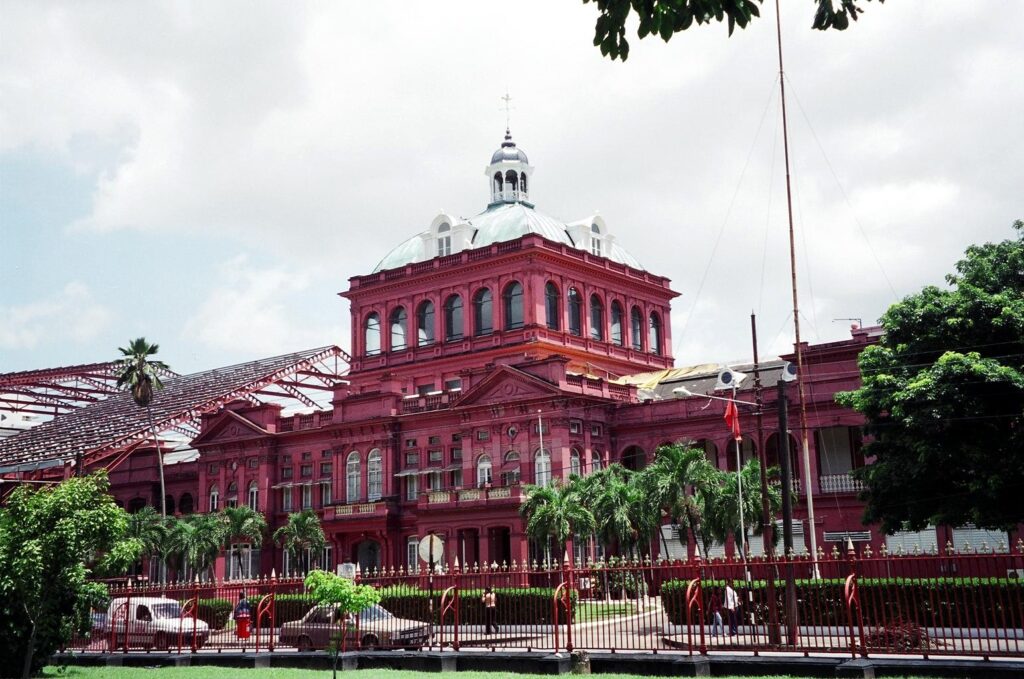
Lịch sử thế giới › Châu Mỹ · Americas › Trinidad và Tobago
Ảnh bìa / Cover photo: Random 00021 at English Wikipedia – Anthony Mendenhall · Wikimedia Commons · CC BY-SA 3.0
Tóm tắt · In brief
Trinidad và Tobago là nơi hồ nhựa đường tự nhiên, dầu mỏ và mía đường định hình vận mệnh, nơi hậu duệ châu Phi, Ấn Độ, châu Âu và Trung Hoa hòa quyện để khai sinh lễ hội Carnival rực rỡ và chiếc trống thép – nhạc cụ tiêu biểu của thế kỷ XX.
Trinidad and Tobago is a land shaped by a natural lake of asphalt, oil and sugar, where descendants of Africa, India, Europe and China blended to create a dazzling Carnival and the steelpan – one of the defining new instruments of the twentieth century.
⏳ Dấu mốc · Key dates🇻🇳 Tiếng Việt🇬🇧 English📚 Nguồn · Sources
Dấu mốc chính · Key dates
- 1498Colombo đặt tên đảo Trinidad / Columbus names Trinidad
- 1797Anh chiếm Trinidad từ Tây Ban Nha / Britain captures Trinidad from Spain
- 1845Lao động giao kèo Ấn Độ đầu tiên đến / First Indian indentured workers arrive
- 1962Độc lập khỏi Anh / Independence from Britain
- 1976Trở thành nước cộng hòa / Becomes a republic
Lịch sử Trinidad và Tobago
Iere và thời Tây Ban Nha
Người bản địa Arawak và Kalinago gọi Trinidad là Iere, thường được hiểu là “vùng đất của chim ruồi”. Năm 1498, trong chuyến hải hành thứ ba, Colombo đặt tên đảo theo ba ngọn đồi gợi nhắc Chúa Ba Ngôi. Tây Ban Nha lập San José de Oruña năm 1592 nhưng thuộc địa phát triển chậm chạp; năm 1595 Walter Raleigh đột kích và dùng nhựa từ Hồ Pitch để trét thuyền. Người bản địa phải chịu lao dịch trong các phái bộ truyền giáo và dân số suy giảm mạnh. Năm 1783, Sắc lệnh Dân cư mời các điền chủ Công giáo, phần lớn là người Pháp, đến định cư cùng những người họ bắt làm nô lệ.
Hai hòn đảo dưới quyền Anh
Năm 1797, hạm đội Anh do Ralph Abercromby chỉ huy chiếm Trinidad, và Tây Ban Nha chính thức nhượng đảo năm 1802. Tobago, nơi Hà Lan, Pháp, Anh và cả Công quốc Courland từng tranh giành, đổi chủ nhiều lần trước khi thuộc hẳn về Anh năm 1814 và được sáp nhập với Trinidad năm 1889. Sau khi chế độ nô lệ chấm dứt năm 1838, tàu Fatel Razack đưa những người lao động giao kèo Ấn Độ đầu tiên đến năm 1845; khoảng 140.000 người đã đến trong bảy thập kỷ tiếp theo. Dầu mỏ được khai thác thương mại từ đầu thế kỷ XX, còn Carnival gắn với ký ức tự do phát triển thành lễ hội quốc gia.
Độc lập và nước cộng hòa
Cuộc bãi công năm 1937 do Uriah “Buzz” Butler dẫn đầu ở các mỏ dầu mở đường cho phong trào lao động và chính trị. Nhà sử học Eric Williams lập Phong trào Quốc gia Nhân dân năm 1956 và dẫn dắt đất nước tới độc lập ngày 31 tháng 8 năm 1962, rồi trở thành cộng hòa năm 1976. Cơn sốt dầu thập niên 1970 mang lại thịnh vượng, trong khi phong trào Quyền lực Da đen năm 1970 thể hiện những đòi hỏi công bằng xã hội. Năm 1990, nhóm Jamaat al Muslimeen tấn công Nhà Đỏ – tòa nhà Quốc hội – trong âm mưu đảo chính bất thành. Ngày nay, khí đốt tự nhiên cùng Carnival và trống thép là nguồn tự hào quốc gia.
History of Trinidad and Tobago
Iere and Spanish rule
The Indigenous Arawak and Kalinago called Trinidad Iere, often translated as “land of the hummingbird”. In 1498, on his third voyage, Columbus named the island after three hills that recalled the Holy Trinity. Spain founded San José de Oruña in 1592, but the colony grew slowly; in 1595 Walter Raleigh raided it and used pitch from the Pitch Lake to caulk his ships. Indigenous people were forced to labour in the missions and their numbers fell sharply. In 1783 the Cedula of Population invited Catholic planters, mostly French, to settle with the people they held in slavery.
Two islands under British rule
In 1797 a British fleet under Ralph Abercromby captured Trinidad, and Spain formally ceded the island in 1802. Tobago, contested by the Dutch, French, British and even the Duchy of Courland, changed hands many times before becoming permanently British in 1814 and being joined with Trinidad in 1889. After slavery ended in 1838, the ship Fatel Razack brought the first Indian indentured labourers in 1845; some 140,000 arrived over the following seven decades. Oil was exploited commercially from the early twentieth century, while Carnival, bound up with the memory of emancipation, grew into a national festival.
Independence and the republic
The 1937 oilfield strike led by Uriah “Buzz” Butler opened the way for a labour and political movement. The historian Eric Williams founded the People’s National Movement in 1956 and led the country to independence on 31 August 1962, and it became a republic in 1976. The oil boom of the 1970s brought prosperity, while the Black Power movement of 1970 voiced demands for social justice. In 1990 the Jamaat al Muslimeen stormed the Red House, the seat of Parliament, in a failed coup attempt. Today natural gas, Carnival and the steelpan are all sources of national pride.
📚 Nguồn đối chiếu · Sources
Bài tổng quan chọn lọc do AIImpish biên soạn; với các vấn đề còn tranh luận, nên đọc thêm tư liệu gốc và nghiên cứu chuyên ngành. / A selective overview by AIImpish; consult primary records and specialist scholarship on contested questions.
Khám phá tiếp · Keep exploring
Đọc lịch sử các nước khác ở Châu Mỹ · Americas hoặc mở danh mục 195 quốc gia →