 AIImpish
Two more AI providers are adding hidden marks to the text their APIs return. Anthropic is extending its text watermark to four older Claude models, and SpaceXSI (xAI) will watermark Grok API text by default from November 7. Your code does not need to change, but your compliance, opt-out, and sampling settings might.
Coffee summary
- FACT: From November 7, 2026, text from seven Grok models carries an invisible watermark by default on every SpaceXSI API endpoint, according to SpaceXSI’s developer docs.
- FACT: A new
x-watermark: trueresponse header tells you a Grok reply was watermarked. Team admins can opt out per model, but some models may be locked on. - FACT: Anthropic told API customers it will watermark Claude Mythos 5, Opus 4.7, Opus 4.6, and Sonnet 4.6, as reported by The Decoder. Newer models such as Opus 5.5 already carry the mark.
- FACT: On Opus 4.6 and Sonnet 4.6, the mark only applies when temperature, top_p, and top_k stay at their defaults.
- OPINION: If you use these APIs for anything customer-facing, check your settings before the start dates, not after.
What happened
SpaceXSI published an Output Watermarking page in its docs. It covers grok-4.7, grok-4.6, grok-4.5, grok-4.3, and the three grok-4.20 variants (reasoning, non-reasoning, and multi-agent). The mark applies to the Responses API and the Chat Completions API, including structured outputs and tool-call arguments. SpaceXSI says it does this to comply with the EU AI Act.
Anthropic’s change arrived by email to API customers, according to The Decoder, which reported it on October 31. Reports of the email put the start at November 3, with Amazon Bedrock a few days later. Anthropic’s Help Center says Claude models launched in the EU on or after August 2, 2026 mark text from day one, and that it is adding marks to older models in stages.
Why it matters
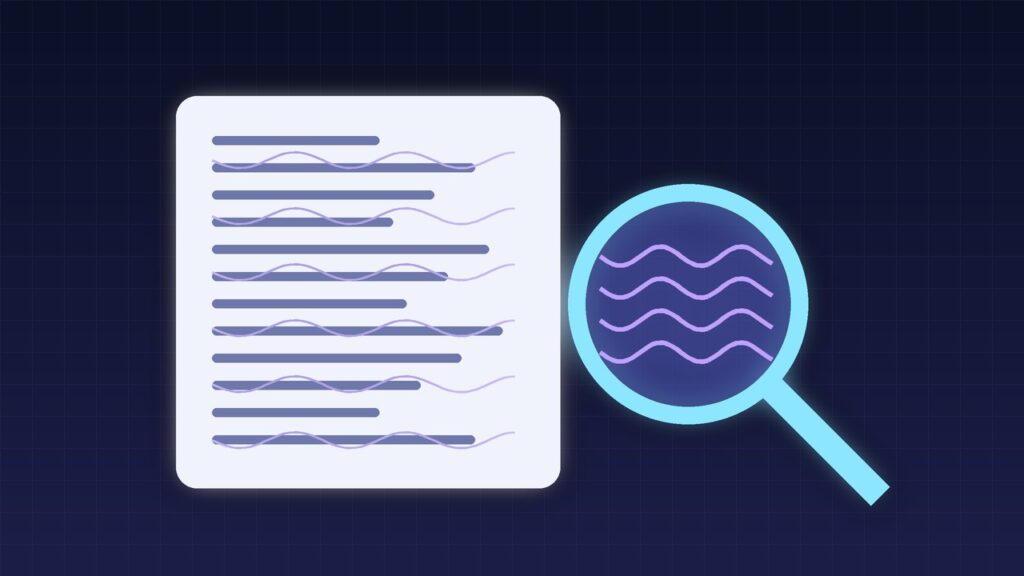
A text watermark is not a visible label. It slightly shapes which words the model picks, so software can later score the text as likely machine-written. SpaceXSI says the mark adds no characters, markup, or hidden text to the output.
That means you cannot strip it by deleting a footer. It travels with copied text and may survive light editing. For businesses, it also means that text you send to customers could later be flagged as AI-generated by someone with detection access.
What changed, at a glance
| Grok API (SpaceXSI) | Claude (Anthropic) | |
|---|---|---|
| Start | November 7, 2026 | Older models from early November (per reports of the email) |
| Default | On | On |
| Opt-out | Team admin, per model, with legal confirmation | Not offered, per The Decoder |
| How to check | x-watermark response header |
Not described in the email reports |
| Detection | By application | Private preview for eligible organizations |
| Known gap | Some models may be locked on | Opus 4.6 and Sonnet 4.6 unmarked if sampling settings change |
Who should care
- Developers building on Grok or Claude APIs, especially if your product sends generated text to end users.
- Teams that tune temperature or top_p on Opus 4.6 or Sonnet 4.6. Changing any one of them turns the mark off on those two models.
- Compliance leads in the EU who may rely on provider marks as part of their own transparency duties.
- Writers and agencies whose clients have rules about AI use.
Limitations and open questions
- No accuracy numbers. Neither company has published detection accuracy or false-positive rates.
- Detection is gated. SpaceXSI grants it by application. Anthropic’s detection is in private preview for groups such as regulators, law enforcement, media, fact-checkers, and researchers.
- Short or rewritten text weakens the signal. Anthropic’s own Help Center says heavy editing, paraphrasing, translation, or very short passages may leave no detectable mark.
- Opting out shifts responsibility. SpaceXSI says opting out requires confirming that a legal exception applies and accepting responsibility for any disclosure duties.
- CLAIM: SpaceXSI says watermarking does not change response quality or speed. That has not been independently tested.
What to do next
- Log the header. If you call Grok, record
x-watermarkon each response so you know what was marked. - Ask your team admin whether any Grok models should be opted out, and get a legal answer before anyone clicks Opt Out.
- Review sampling settings on Opus 4.6 and Sonnet 4.6. Anthropic’s advice, per the email: “If you rely on the watermark for your own compliance, keep these settings at their defaults.”
- Tell clients plainly when AI helped write a deliverable, instead of hoping no one checks.
- Do not treat detection as proof. OPINION: A statistical score is a signal, not a full record of who wrote what, especially for short or edited text.
AIImpish Take
Invisible watermarks are becoming the default across major AI APIs, driven by the EU AI Act. For most builders, nothing breaks. The real work is knowing which outputs are marked, who can detect them, and whether a small sampling tweak is quietly switching the mark off.
Related on AIImpish
- Claude Text Watermark and Detection API Access (EU AI Act)
- One robots.txt Rule to Opt Out of AI Training: What Google, Microsoft, OpenAI, and Anthropic Agreed To
- Gemini API now stores your requests by default on new paid projects: how to check and turn it off
Sources: SpaceXSI Docs, Output Watermarking; Claude Help Center, How Claude marks AI-generated content; The Decoder, Anthropic’s watermark rollout leaves a loophole on two older Claude models.