 AIImpish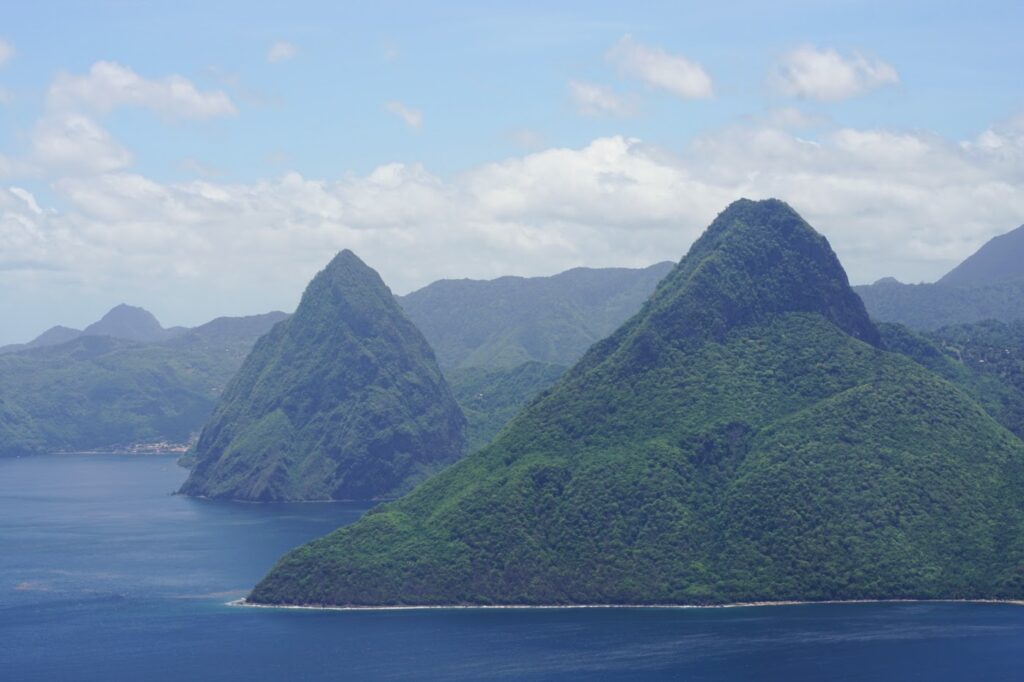
Lịch sử thế giới › Châu Mỹ · Americas › Saint Lucia
Ảnh bìa / Cover photo: Caribbeandy · Wikimedia Commons · CC BY-SA 4.0
Tóm tắt · In brief
Được mệnh danh “Helen của Tây Ấn” vì Anh và Pháp tranh giành nó tới mười bốn lần, Saint Lucia là hòn đảo dưới bóng hai đỉnh Piton, mang dấu ấn song ngữ Pháp – Anh và sản sinh hai nhà khoa học, văn chương đoạt giải Nobel.
Nicknamed the “Helen of the West Indies” because Britain and France fought over it some fourteen times, Saint Lucia is an island in the shadow of the twin Pitons, stamped with a French–English heritage and home to two Nobel laureates.
⏳ Dấu mốc · Key dates🇻🇳 Tiếng Việt🇬🇧 English📚 Nguồn · Sources
Dấu mốc chính · Key dates
- 1660Hiệp ước giữa người Pháp và người Kalinago / Franco–Kalinago treaty
- 1782Rodney xuất quân từ Gros Islet trước trận Saintes / Rodney sails from Gros Islet before the Battle of the Saintes
- 1814Hiệp ước Paris trao đảo cho Anh / Treaty of Paris cedes the island to Britain
- 1838Chấm dứt chế độ nô lệ hoàn toàn / Full emancipation from slavery
- 1979Độc lập khỏi Anh / Independence from Britain
Lịch sử Saint Lucia
Hewanorra và người Kalinago
Những cư dân đầu tiên là người Arawak đến từ Nam Mỹ, sau đó là người Kalinago, những người gọi hòn đảo là Iouanalao hoặc Hewanorra, tên nay vẫn được đặt cho sân bay quốc tế. Theo truyền thống, đảo được đặt tên theo thánh Lucia. Người Kalinago kháng cự quyết liệt: một nhóm người Anh định cư năm 1605 và một nhóm khác năm 1639 đều bị đẩy lui. Người Pháp, từ đảo Martinique gần đó, kiên trì hơn và ký hiệp ước với người Kalinago năm 1660. Tên hải tặc François Le Clerc, “Chân Gỗ”, được cho là từng dùng Đảo Bồ câu làm căn cứ từ giữa thế kỷ XVI.
Hòn đảo bị tranh giành
Từ thế kỷ XVII đến đầu thế kỷ XIX, Saint Lucia đổi chủ giữa Anh và Pháp khoảng mười bốn lần, vì vị trí chiến lược với cảng Castries sâu và kín gió. Người Pháp phát triển đồn điền mía với sức lao động của người châu Phi bị bắt làm nô lệ và để lại tiếng Kwéyòl, Công giáo cùng nhiều địa danh. Năm 1782, Đô đốc Rodney xuất quân từ vùng Gros Islet, nơi có pháo đài trên Đảo Bồ câu, trước khi đánh bại hạm đội Pháp trong trận Saintes. Sau khi Pháp cách mạng bãi bỏ chế độ nô lệ năm 1794, người được giải phóng chống lại sự trở lại của Anh trong “Chiến tranh Brigand”.
Thuộc địa Anh và quốc gia độc lập
Hiệp ước Paris năm 1814 chính thức trao Saint Lucia cho Anh. Chế độ nô lệ bị bãi bỏ năm 1834 và chấm dứt hẳn năm 1838; sau đó lao động giao kèo từ Ấn Độ được đưa đến. Castries trở thành trạm tiếp than quan trọng cho tàu hơi nước cuối thế kỷ XIX. Đảo có quyền tự trị năm 1967 và độc lập ngày 22 tháng 2 năm 1979, với John Compton là thủ tướng đầu tiên. Chuối từng là trụ cột kinh tế, trước khi du lịch thay thế. Hòn đảo nhỏ này tự hào có hai người đoạt giải Nobel: nhà kinh tế học Sir Arthur Lewis và nhà thơ Derek Walcott.
History of Saint Lucia
Hewanorra and the Kalinago
The first inhabitants were Arawak peoples from South America, followed by the Kalinago, who called the island Iouanalao or Hewanorra, a name now borne by its international airport. By tradition the island is named after Saint Lucy. The Kalinago resisted fiercely: English settlers who arrived in 1605 and another group in 1639 were both driven off. The French, operating from nearby Martinique, proved more persistent and signed a treaty with the Kalinago in 1660. The pirate François Le Clerc, “Peg Leg”, is said to have used Pigeon Island as a base in the mid-sixteenth century.
A contested island
From the seventeenth to the early nineteenth century Saint Lucia changed hands between Britain and France about fourteen times, prized for its strategic position and the deep, sheltered harbour of Castries. The French developed sugar plantations worked by enslaved Africans and left behind Kwéyòl, Catholicism and many place names. In 1782 Admiral Rodney sailed from the Gros Islet area, guarded by a fort on Pigeon Island, before defeating the French fleet at the Battle of the Saintes. After revolutionary France abolished slavery in 1794, freed people resisted Britain’s return in the “Brigands’ War”.
British colony and independent nation
The Treaty of Paris in 1814 formally ceded Saint Lucia to Britain. Slavery was abolished in 1834 and ended completely in 1838; indentured labourers from India were later brought in. Castries became an important coaling station for steamships in the late nineteenth century. The island gained self-government in 1967 and independence on 22 February 1979, with John Compton as its first prime minister. Bananas were long the backbone of the economy before tourism took over. This small island proudly claims two Nobel laureates: the economist Sir Arthur Lewis and the poet Derek Walcott.
📚 Nguồn đối chiếu · Sources
- Encyclopaedia Britannica — Saint Lucia
- Wikipedia — History of Saint Lucia
- UNESCO — Pitons Management Area
Bài tổng quan chọn lọc do AIImpish biên soạn; với các vấn đề còn tranh luận, nên đọc thêm tư liệu gốc và nghiên cứu chuyên ngành. / A selective overview by AIImpish; consult primary records and specialist scholarship on contested questions.
Khám phá tiếp · Keep exploring
Đọc lịch sử các nước khác ở Châu Mỹ · Americas hoặc mở danh mục 195 quốc gia →