 AIImpish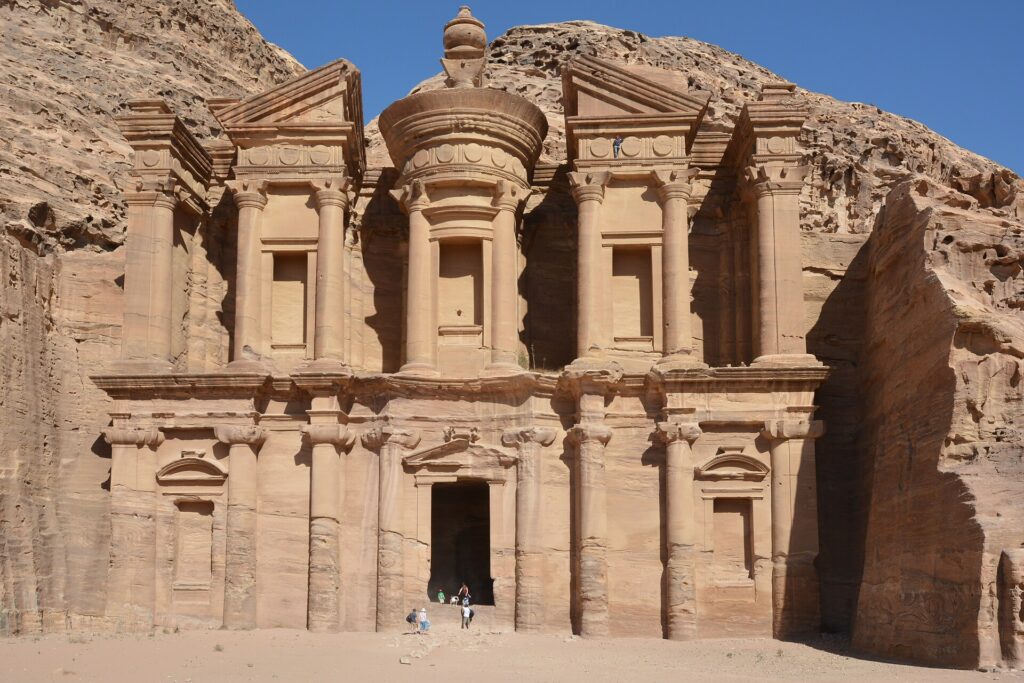
Lịch sử thế giới › Châu Á · Asia › Jordan
Ảnh bìa / Cover photo: Azurfrog · Wikimedia Commons · CC BY-SA 3.0
Tóm tắt · In brief
Là nơi có thành Petra tạc vào vách đá hồng của người Nabataea, những con đường La Mã ở Jerash và các lâu đài Thập tự chinh, Jordan là một vương quốc sa mạc đã giữ vững sự ổn định giữa một khu vực đầy biến động.
Home to the rose-red rock city of the Nabataeans at Petra, the colonnaded Roman streets of Jerash and Crusader castles, Jordan is a desert kingdom that has kept its footing amid one of the world’s most turbulent regions.
⏳ Dấu mốc · Key dates🇻🇳 Tiếng Việt🇬🇧 English📚 Nguồn · Sources
Dấu mốc chính · Key dates
- 106La Mã sáp nhập Vương quốc Nabataea / Rome annexes the Nabataean kingdom
- 636Trận Yarmouk / Battle of the Yarmouk
- 1921Thành lập Tiểu vương quốc Transjordan / Emirate of Transjordan established
- 1946Độc lập / Independence
- 1994Hòa ước với Israel / Peace treaty with Israel
Lịch sử Jordan
Từ Ain Ghazal đến Petra
Tại Ain Ghazal gần Amman, các nhà khảo cổ tìm thấy những bức tượng thạch cao thời đồ đá mới thuộc loại cổ nhất thế giới. Thời đồ sắt, các vương quốc Ammon, Moab và Edom hưng thịnh; tấm bia Mesha ghi lại chiến công của một vị vua Moab. Người Nabataea sau đó kiểm soát các tuyến buôn hương liệu và tạc vào vách đá sa thạch thành Petra với đền Al-Khazneh nổi tiếng. Năm 106, La Mã sáp nhập vương quốc này thành tỉnh Arabia Petraea. Jerash (Gerasa) thuộc liên minh Decapolis phát triển với đền đài và quảng trường hình bầu dục, còn tấm khảm bản đồ Madaba thời Byzantine là tấm bản đồ Đất Thánh cổ nhất còn lại.
Các triều đại Hồi giáo, Thập tự chinh và Ottoman
Năm 636, quân Ả Rập Hồi giáo đánh bại Byzantine trong trận Yarmouk, mở ra kỷ nguyên mới. Các khalip Umayyad xây những lâu đài giữa sa mạc như Qusayr Amra với những bức bích họa độc đáo. Thế kỷ 12, Thập tự quân dựng các pháo đài Kerak và Shobak để kiểm soát tuyến đường giữa Syria và Ai Cập, trước khi Saladin và sau đó là người Mamluk giành lại. Từ năm 1516, vùng đất thuộc Đế quốc Ottoman. Năm 1916, Sharif Hussein xứ Mecca phát động cuộc Khởi nghĩa Ả Rập; năm 1917, lực lượng Ả Rập với sự tham gia của sĩ quan Anh T. E. Lawrence chiếm cảng Aqaba.
Vương quốc Hashemite
Năm 1921, dưới chế độ ủy trị của Anh, Abdullah, con trai Sharif Hussein, trở thành tiểu vương Transjordan; đất nước độc lập năm 1946. Sau cuộc chiến năm 1948, Jordan kiểm soát Bờ Tây và Đông Jerusalem, và tiếp nhận rất nhiều người tị nạn Palestine. Vua Abdullah I bị ám sát năm 1951; vua Hussein trị vì từ năm 1952 đến 1999, trải qua cuộc chiến năm 1967 khiến Jordan mất Bờ Tây, cuộc xung đột với các nhóm vũ trang Palestine năm 1970 và việc ký hòa ước với Israel năm 1994. Dưới thời vua Abdullah II, Jordan tiếp tục đón nhận người tị nạn, đặc biệt từ cuộc nội chiến Syria.
History of Jordan
From Ain Ghazal to Petra
At Ain Ghazal near Amman, archaeologists found Neolithic plaster statues that rank among the oldest of their kind in the world. In the Iron Age the kingdoms of Ammon, Moab and Edom flourished; the Mesha Stele records the triumphs of a Moabite king. The Nabataeans later controlled the incense routes and carved Petra, with its famous Al-Khazneh, into sandstone cliffs. In 106 Rome annexed their kingdom as the province of Arabia Petraea. Jerash (Gerasa), a member of the Decapolis, grew rich with temples and an oval plaza, while the Byzantine Madaba mosaic is the oldest surviving map of the Holy Land.
Islamic dynasties, Crusaders and Ottomans
In 636 Arab Muslim armies defeated Byzantium at the Battle of the Yarmouk, opening a new era. Umayyad caliphs built desert palaces such as Qusayr Amra, with its remarkable frescoes. In the 12th century the Crusaders raised the fortresses of Kerak and Shobak to control the route between Syria and Egypt, before Saladin and later the Mamluks retook them. From 1516 the region belonged to the Ottoman Empire. In 1916 Sharif Hussein of Mecca launched the Arab Revolt; in 1917 Arab forces, joined by the British officer T. E. Lawrence, captured the port of Aqaba.
The Hashemite kingdom
In 1921, under the British mandate, Sharif Hussein’s son Abdullah became emir of Transjordan; the country gained independence in 1946. After the 1948 war Jordan controlled the West Bank and East Jerusalem and took in very large numbers of Palestinian refugees. King Abdullah I was assassinated in 1951; King Hussein reigned from 1952 to 1999, through the 1967 war in which Jordan lost the West Bank, the 1970 conflict with Palestinian armed groups and the 1994 peace treaty with Israel. Under King Abdullah II, Jordan has continued to host refugees, notably from the Syrian civil war.
📚 Nguồn đối chiếu · Sources
Bài tổng quan chọn lọc do AIImpish biên soạn; với các vấn đề còn tranh luận, nên đọc thêm tư liệu gốc và nghiên cứu chuyên ngành. / A selective overview by AIImpish; consult primary records and specialist scholarship on contested questions.
Khám phá tiếp · Keep exploring
Đọc lịch sử các nước khác ở Châu Á · Asia hoặc mở danh mục 195 quốc gia →